Luxury Timepieces
Watch
A high-velocity seventeen-second spot built to prove that mirror-polished steel, knurled crowns, and dial indices can be cut at blistering speed without sacrificing micro-detail.
The Brief & Challenge
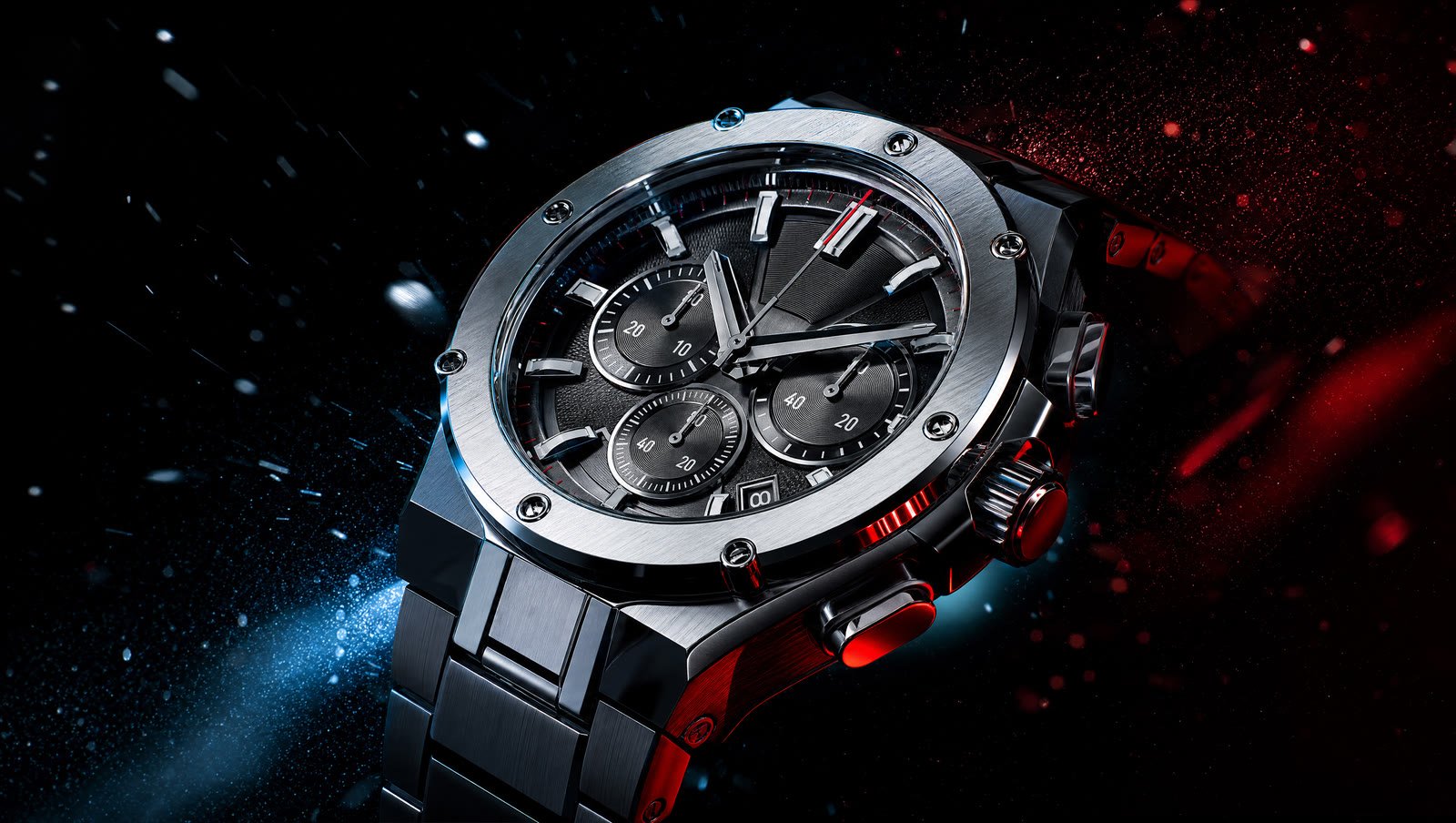
High-end luxury watches are notoriously unforgiving to animate at pace. Mirror-polished stainless steel and curved sapphire crystals create aggressive specular highlights that can quickly deteriorate into visual clutter when camera velocities increase. Furthermore, the micro-details that watch connoisseurs scrutinize — the bezel knurling, dial guilloché, and multi-link bracelet articulation — are easily lost.
The brief was to marry the kinetic energy of a supercar spot with the forensic precision of a horological master catalog. Seventeen seconds. Zero dialogue. The physical geometry carries the entire narrative.
The Craft & Technical Execution
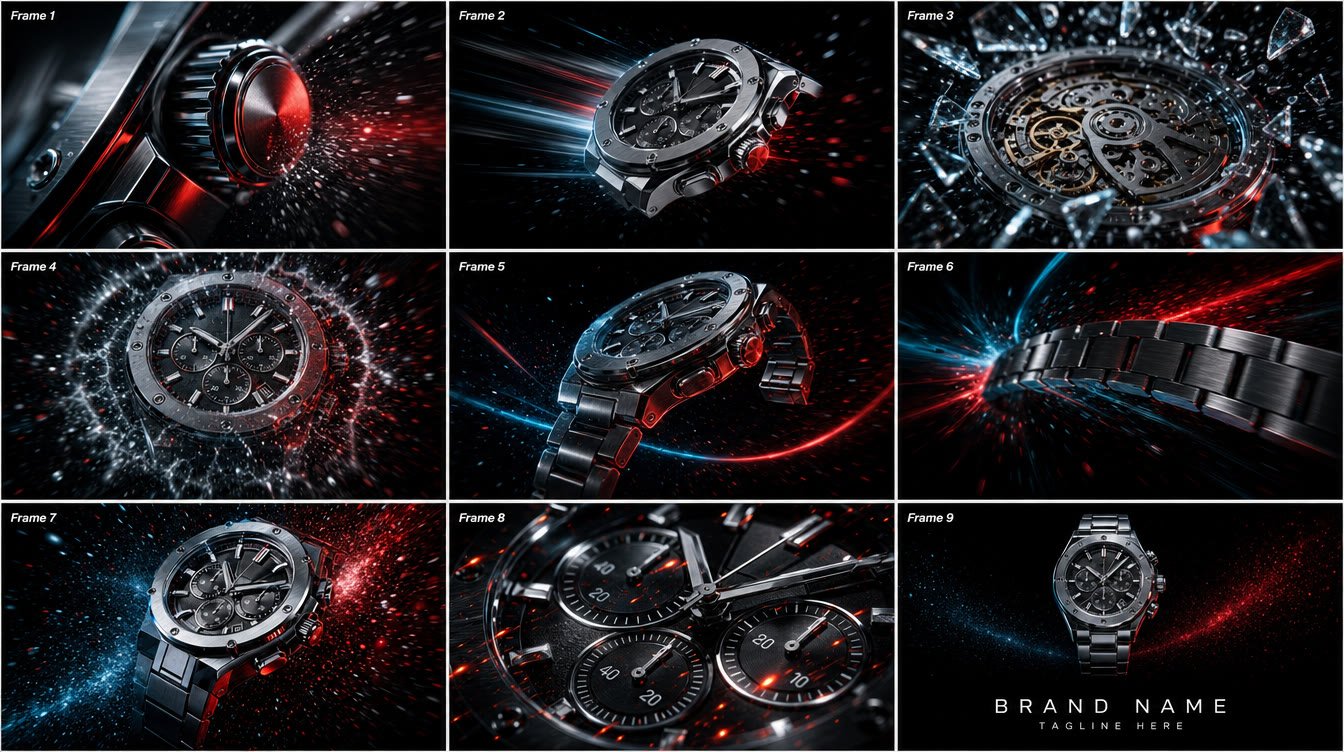
Rather than relying on conventional hard camera cuts between static views, the film utilizes calibrated physical motion blur as a dynamic transition device. Each frame arrives already immersed in camera acceleration, crisply resolves into tack-sharp macro focus for a fraction of a second, and whips into the subsequent facet before the viewer’s eye tires.
Lighting was established with a singular hard key light raked across the case perimeter accompanied by a deep cool ambient fill. As the camera orbits the watch, the highlight travels in tandem with the lens axis, defining the edge geometry and accentuating the physical mass of the timepiece.
Audio Architecture
To match the hyper-kinetic visual cadence, audio was designed from the ground up against the final frame sequence. Mechanical clicks, escapement wheel oscillations, and low-frequency pneumatic sweeps were layered to provide tactile weight to every camera whip and lockup.
Pre-Production & Keyframes
Approved Storyboard & Stills
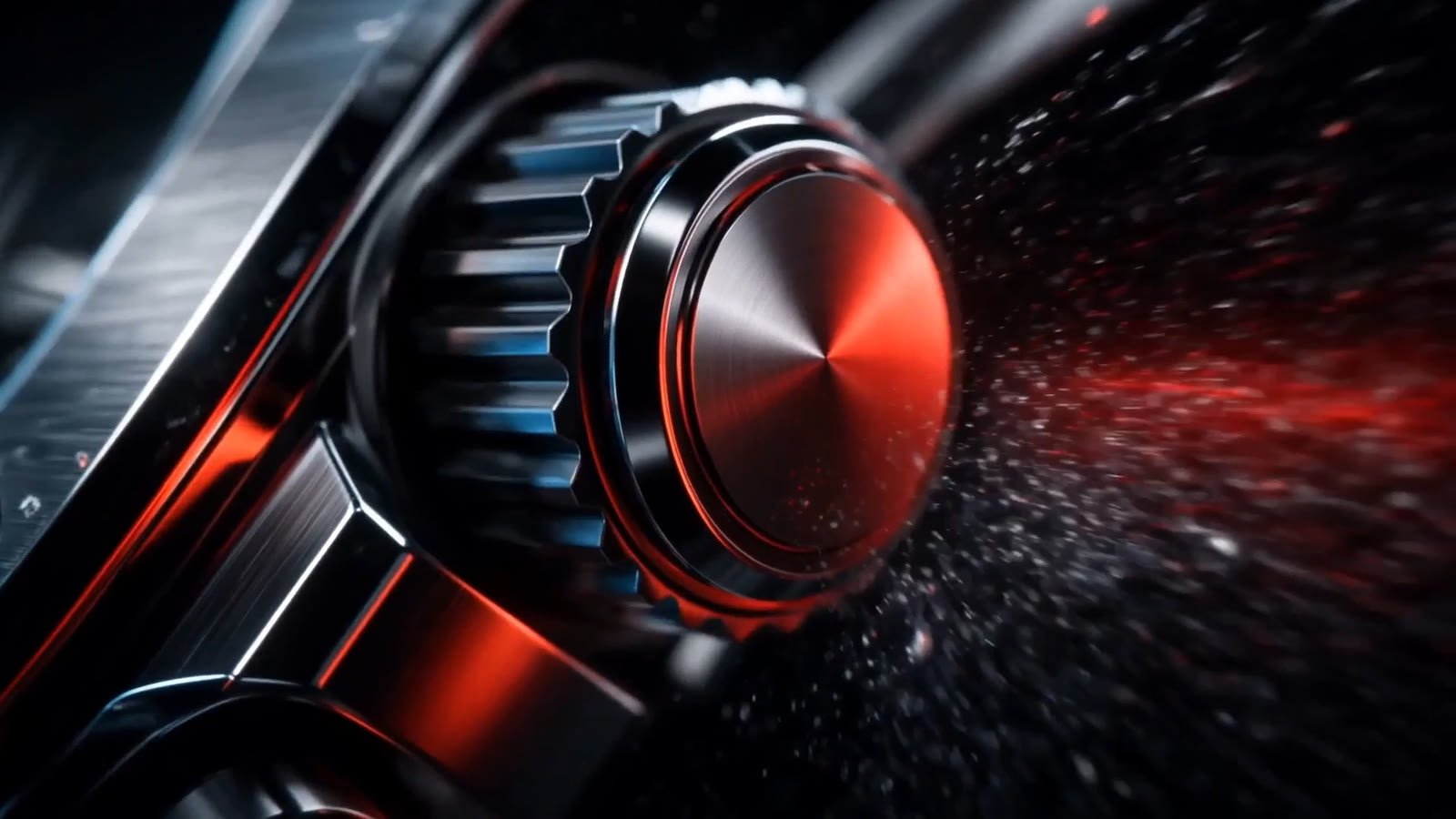
Pre-Viz Sequence